Luxembourg »
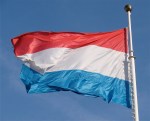
Founded in 963, Luxembourg became a grand duchy in 1815 and an independent state under the Netherlands. It lost more than half of its territory to Belgium in 1839 but gained a larger measure of autonomy. Full independence was attained in 1867. Overrun by Germany in both world wars, it ended its neutrality in 1948 when it entered into the Benelux Customs Union and when it joined NATO the following year. In 1957, Luxembourg became one of the six founding countries of the European Economic Community (later the European Union), and in 1999 it joined the euro currency area. In January 2013, Luxembourg assumed a nonpermanent seat on the UN Security Council for the 2013-14 term.
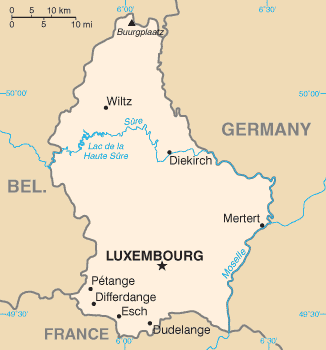
Click to enlarge
Capital: Luxembourg
Population: 514,862 (July 2013 est.)
Currency: Euro (€)
Official Language: Luxembourgish, French, German
Ethnicity/race: Luxembourger 63.1%, Portuguese 13.3%, French 4.5%, Italian 4.3%, German 2.3%, other EU 7.3%, other 5.2% (2000 census)
Religion: Roman Catholic 87%, other (includes Protestant, Jewish, and Muslim) 13% (2000)
*Source: CIA Factbook
3 Interesting Facts:
- Luxembourgish, a Franconian language of the Moselle region, is the mother tongue of nearly all Luxembourgers. In spite of that, most official (written) business is carried out in French, whereas German is the first language taught in school and used in the media.
- The original country, then Duchy of Luxembourg was about three times the size of the modern country, including notably most of the Belgian province of Luxembourg.
- Luxembourg has the 2nd highest GDP per capita in the world ($77,958). It trails Qatar ($100,889), but greatly surpasses other countries such as US ($51,704), Canada ($42,317) or Germany ($38,666). (2012 est.)
~


 Cris2Travel
Leave a comment
Comments 0